Best Porgy Rig: Simple High-Low Setup
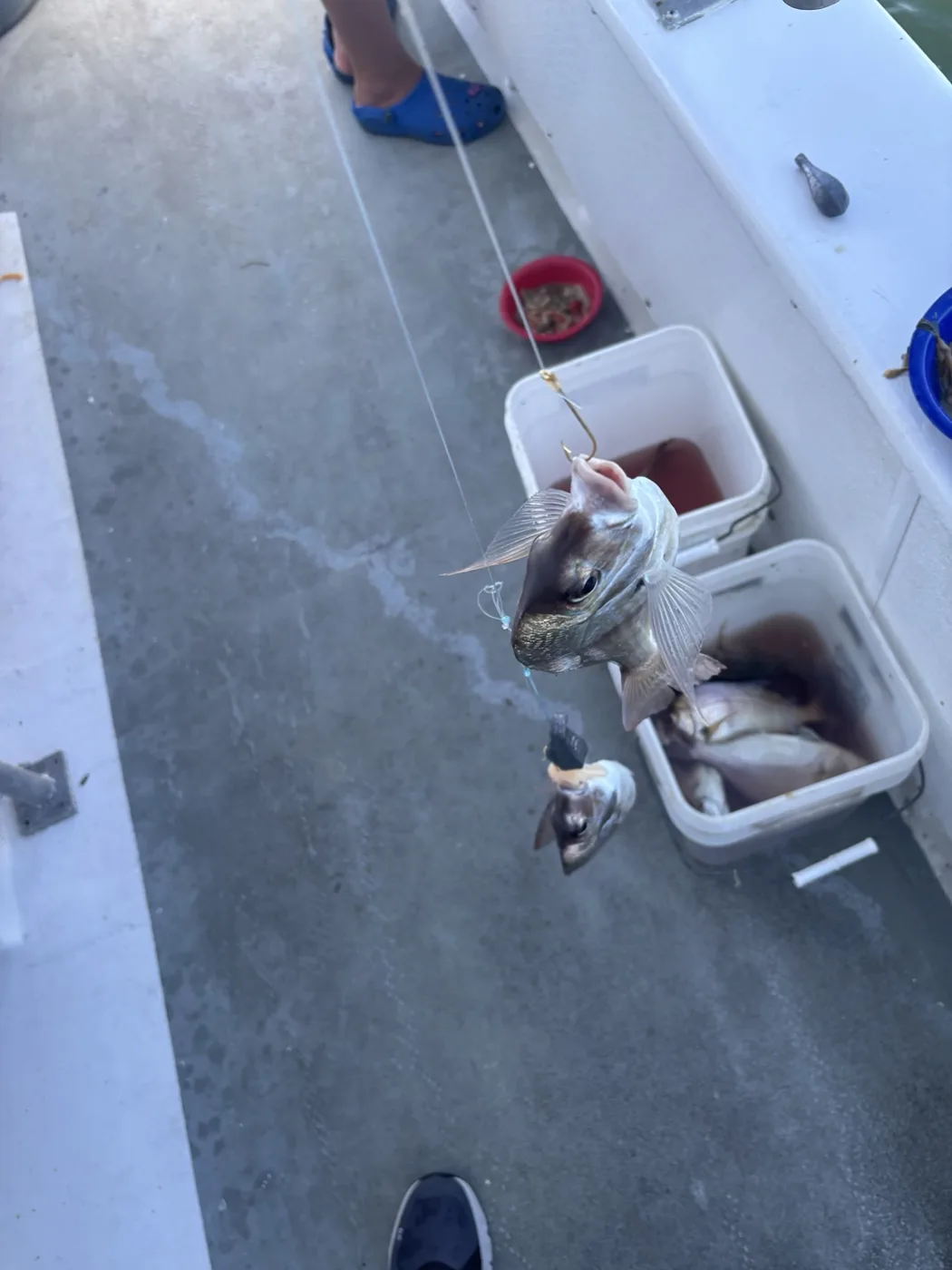
If someone asks me what rig to use for porgy fishing, my answer is simple: use a basic two-hook high-low rig.
That is the setup I use most often.
It is also the setup I would expect on a party boat.
It is simple, proven, easy to understand, and catches fish.
Porgy fishing does not usually require a fancy rig. In my experience, a clean basic setup with good hooks, the right sinker weight, fresh bait, and contact with the bottom matters far more than anything complicated.
The Rig I Use Most Often
The rig I use most often is a two-hook high-low rig.
That means there are two hooks tied above the sinker. One hook sits higher and one sits lower. The sinker keeps the rig near the bottom, where porgies usually feed.
That setup works well because porgies often feed in groups. When the bite is good, having two hooks gives you two chances to catch fish on the same drop.
It also creates the possibility of a double header.
Why Double Headers Are So Exciting
A double header is when you catch two fish at the same time.
On a porgy boat, that is always exciting.
I have caught more than one porgy at a time. my family has too. When it happens, the fish feel much bigger than they actually are because they are pulling in different directions.
For a few seconds, you might think you hooked something huge.
The rod feels different.
The pull feels heavier.
The line feels alive in a different way.
Then the fish come up and you realize there are two porgies on the rig.
That is one of those small party boat moments that gets everyone excited. People look over. Kids notice. The crew notices. It feels like you won something.
That is one reason I like a two-hook rig. It is simple, but it gives you the chance for one of the most fun things that can happen during a steady porgy bite.
Pre-Tied Rigs Are Fine
I usually buy pre-tied rigs.
There is nothing wrong with tying your own if you enjoy that part of fishing, but for most beginner and family porgy trips, pre-tied rigs are completely fine.
Porgy fishing is not usually won by having the most custom rig on the boat. It is won by using solid gear, keeping bait on the hooks, staying near the bottom, and fishing patiently.
If you are new, do not feel like you need to master knots before your first trip.
A decent pre-tied high-low rig is usually all you need.
Fancy Rigs Do Not Matter Much
Fancy rigs do not matter much for porgies.
That does not mean tackle quality is irrelevant. It matters.
But complicated does not automatically mean better.
Porgies are aggressive feeders. If you are on fish, using good bait, fishing near the bottom, and your hooks are in good shape, you have a very good chance.
I would rather use a simple rig correctly than an elaborate rig badly.
For most people, especially beginners, simplicity is an advantage.
The Biggest Rig Mistake Beginners Make
The biggest rig mistake is not usually choosing the wrong style.
It is using bad hooks.
Bent hooks are a problem.
Rusted hooks are a problem.
Dull hooks are a problem.
If the hook is not in good shape, you are making the entire trip harder.
Before fishing, check the hooks. They should be clean, solid, sharp enough to do the job, and not bent out of shape.
This sounds basic, but it matters. A rig can look fine at a glance and still have a hook that is not worth using.
If something looks rusty, weak, or damaged, replace it.
The Right Sinker Weight Matters
The rig itself is only part of the setup.
The sinker matters too.
You need enough weight to hold bottom or at least stay close to bottom, depending on the tide, current, depth, and drift.
If the sinker is too light, your rig may sweep away from the bottom and you will not be fishing where the porgies are feeding.
If the sinker is too heavy, it can feel clunky and make bites harder to feel.
On a party boat, the crew will usually tell you what weight to use. That is one of the advantages of fishing on a good boat. You do not have to guess as much.
If they tell you to switch weights, listen.
They are watching the conditions all day.
Bait Still Matters
A good rig does not help much if the bait is wrong or missing.
For porgies, I like clams first and squid second.
Clams have caught the most porgies for me. Squid is cleaner and easier to keep on the hook, but if I have both options, I usually start with clams.
The rig gets the bait into the right zone.
The bait gets the fish to bite.
Both matter.
Keeping Contact With Bottom
The most important fishing skill with a porgy rig is staying near bottom.
Porgies usually feed low. If your rig is floating too high or drifting too far out of position, you may be out of the strike zone.
The goal is to hit bottom, lift slightly, and stay in contact enough that you know where the rig is.
Some people describe it as bouncing near the bottom.
You do not want to drag wildly or ignore the feel of the rig. You want to know that your bait is down where the fish are.
That bottom contact is one of the biggest differences between casually dropping a line and actually fishing effectively.
What the Boat Gives You Is Usually Right
If you are fishing from a party boat, the simplest answer is often this:
Use what the boat gives you.
They are going to give you the right general rig for the kind of fishing they are doing that day.
They know the depth.
They know the bottom.
They know the current.
They know the size of fish people have been catching.
They know what works on their boat.
If you are a beginner, do not overcomplicate it. Let the crew set you up.
That is one of the reasons party boats are so good for first-timers. You do not have to show up with a perfect tackle box. The boat already knows what the day requires.
Two Hooks Are Enough
For most porgy fishing, two hooks are enough.
Some people may fish more hooks in certain situations, but I like the simplicity of two.
Two hooks give you a chance at a double header without making the rig overly complicated.
More hooks can mean more tangles, more baiting, more confusion, and more trouble for beginners.
A clean two-hook high-low rig is the sweet spot.
It gives you opportunity without unnecessary mess.
What I Would Tell a Beginner
If someone got on a Greenport party boat tomorrow and asked me what rig to use, I would say:
Use the rig the boat gives you, make sure the hooks are not bent or rusty, use the right sinker for the conditions, bait it with clams or squid, and keep it near the bottom.
That is basically the whole game.
You do not need a secret rig.
You do not need a complicated setup.
You do not need to outsmart everyone on the boat.
For porgies, simple works.
My Bottom Line
The best porgy rig is a basic two-hook high-low rig with good hooks, the right sinker, and fresh bait.
That setup is simple enough for beginners, effective enough for experienced anglers, and exciting enough to produce double headers when the bite is good.
Porgy fishing rewards doing the basic things well.
Use a clean rig.
Use good bait.
Stay near bottom.
Listen to the crew.
And when the rod suddenly feels heavier than expected, do not be surprised if two porgies come up instead of one.
Why the High-Low Rig Works
The high-low rig remains popular because it is simple, inexpensive, easy for beginners to understand, and highly effective around the structure where porgies are commonly found.
If someone asked for one rig to use all season, this would probably be the recommendation.