Whole Baked Porgy With Lemon and Herbs
Whole baked porgy with lemon, herbs, garlic, olive oil, salt, and pepper is the simplest way to understand why porgies are worth keeping. Fresh scup does not need a complicated recipe. It needs clean handling, simple seasoning, and enough respect not to bury the fish.
If someone asks me whether porgy is good to eat, this is the dish I think about first. Not fried. Not hidden in a taco. Not covered in sauce. Just whole fish, cooked simply, with the kind of ingredients that make good fresh fish taste like itself.
The first porgy meal that changed my opinion was at a local Greek restaurant on Long Island. The fish was served whole with sliced tomatoes, cucumber, olive oil, vinegar, and fresh oregano. It was simple and excellent. That meal made me realize that porgy could deliver the same kind of whole-fish experience people happily order in Mediterranean restaurants.
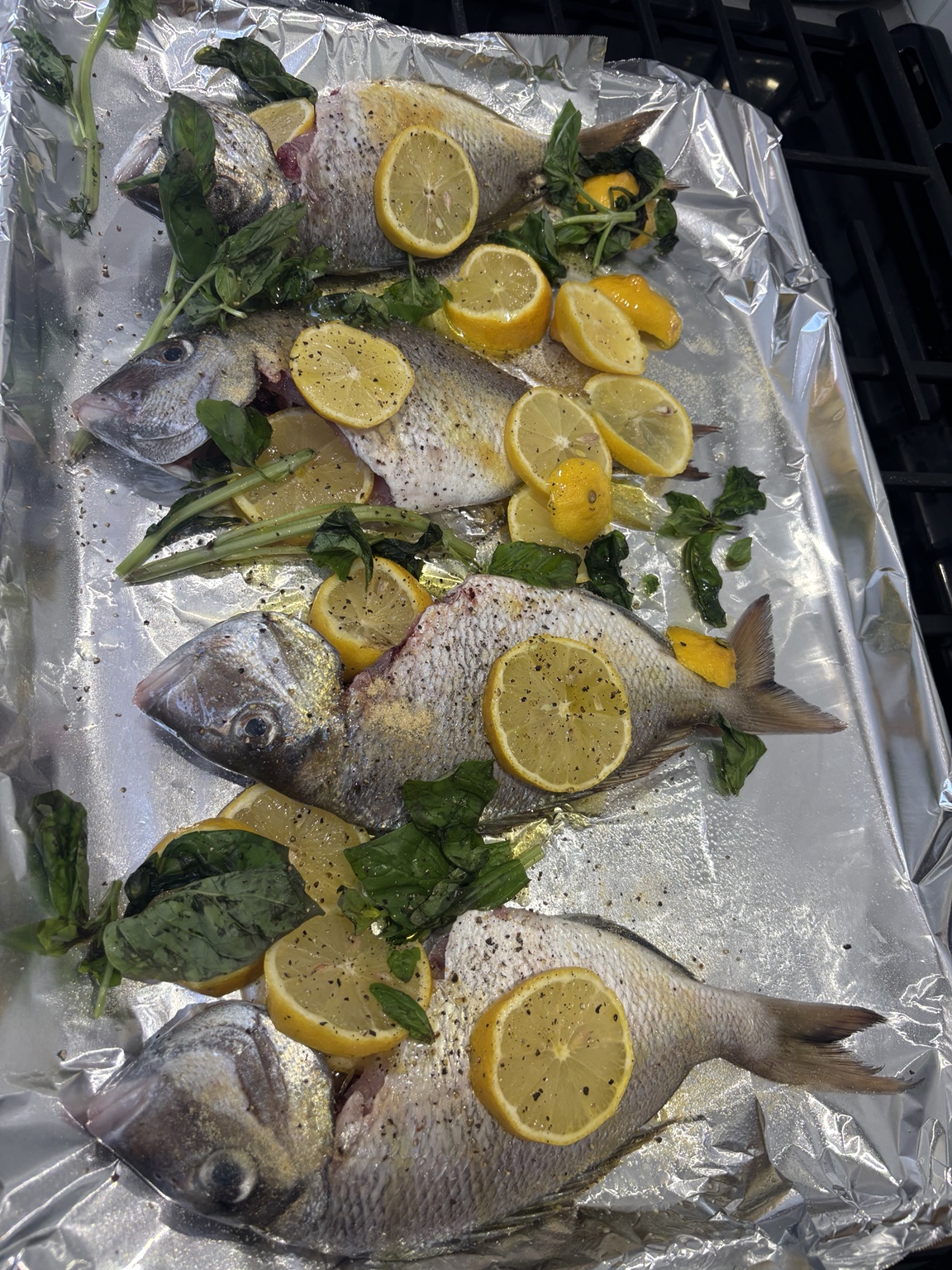
Why bake porgy whole?
Cooking porgy whole helps keep the fish moist and flavorful. The bones and skin protect the meat, and the cavity gives you a place to add lemon, herbs, and garlic. For smaller fish, whole cooking also makes practical sense. You do not need to turn every porgy into small fillets.
Whole fish also feels more special on the table. A baked porgy with lemon and herbs looks like a real dinner centerpiece, not just “small fish from a party boat.”
That matters because porgies have a reputation problem. Some anglers treat them like a lesser fish because they are common and not usually huge. But a fresh whole porgy cooked well can taste as good as many restaurant fish people respect much more.
Best fish for this recipe
Use fresh, legal porgies that have been cleaned well. If you are on a party boat, you can usually ask the crew to leave some fish whole rather than filleting everything. That is exactly what I would do after a good trip: keep a few whole for baking or grilling and fillet the rest for ceviche, tacos, frying, or freezing.
For whole baking, fish do not need to be giant. A modest keeper porgy can work beautifully. The key is freshness and clean preparation.
Ingredients
Basic ingredients
- 1 or more whole cleaned porgies
- Lemon slices
- Fresh rosemary, oregano, parsley, or thyme
- Garlic, sliced or lightly crushed
- Olive oil
- Salt
- Black pepper
- Optional: sliced tomato, cucumber salad, roasted potatoes, or crusty bread for serving
The basic method
How to bake whole porgy
- Heat the oven to a moderate hot baking temperature.
- Pat the cleaned fish dry.
- Season the inside and outside with salt and pepper.
- Stuff the cavity with lemon slices, herbs, and garlic.
- Rub the outside with olive oil.
- Place the fish on a baking sheet or in a baking dish.
- Bake until the flesh flakes easily and pulls from the bone.
- Rest briefly, then serve with extra lemon and simple sides.
Do not overcomplicate it
The biggest mistake with fresh porgy is doing too much. If the fish is fresh, the recipe should support the flavor rather than hide it. Lemon, herbs, olive oil, garlic, salt, and pepper are enough.
That is exactly what made the Greek restaurant porgy so memorable. It was not trying to be clever. It was letting the fish taste fresh.
Which herbs work best?
Rosemary is great if you want a stronger herb flavor. Oregano makes the fish feel more Greek or Mediterranean. Parsley is cleaner and milder. Thyme also works well. You can use whatever you have, but do not overload the fish with every herb in the kitchen.
My default would be lemon, garlic, olive oil, and rosemary or oregano. That combination is simple, reliable, and perfect for whole porgy.
Oven versus grill
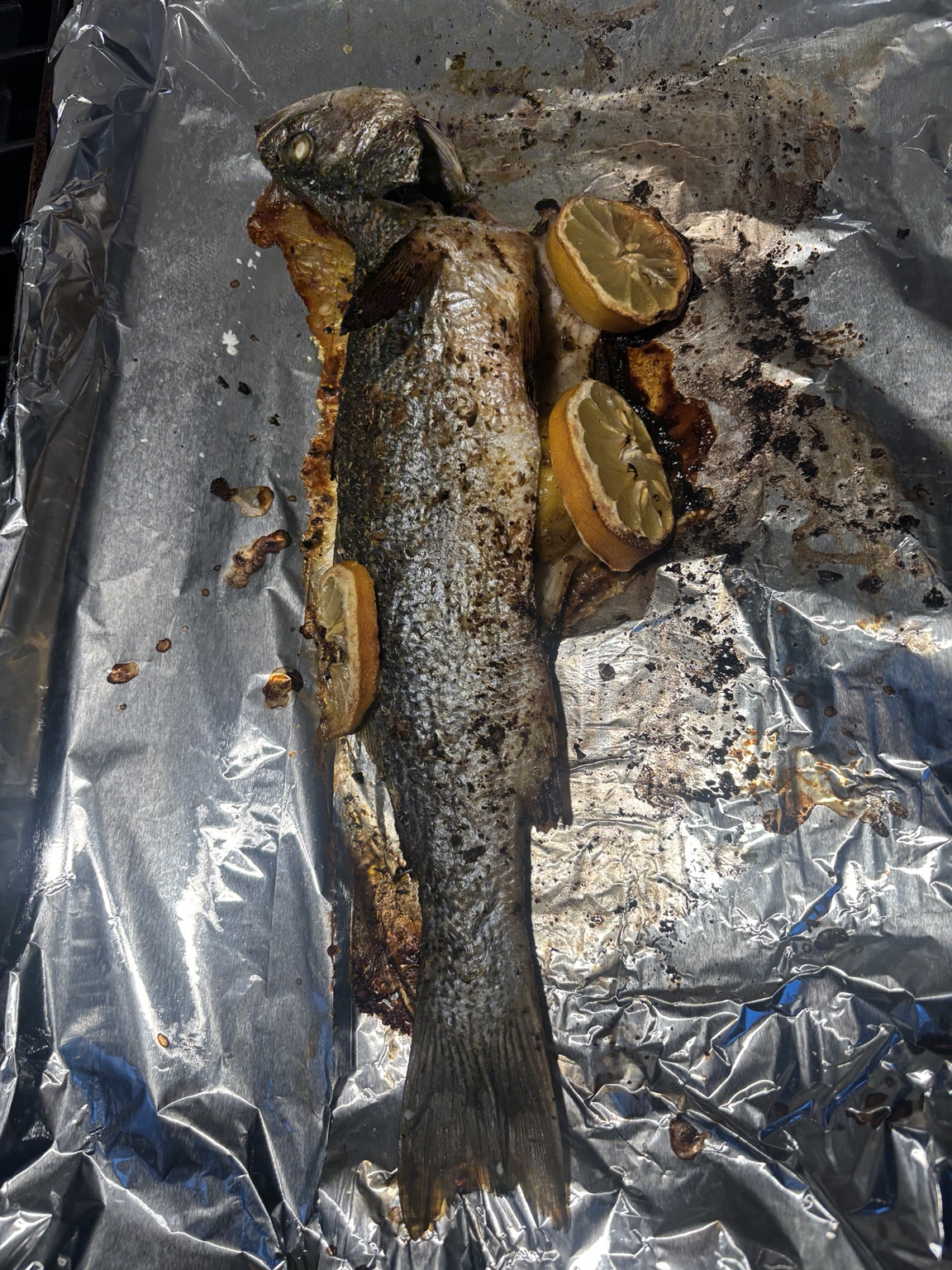
This recipe works in the oven, but the same idea also works on the grill. Grilling adds smoke and a little more drama. Baking is easier to control and works better if you want a low-stress weeknight dinner after a long fishing day.
After a party boat trip, I often like simplicity. Everyone is tired. Everyone smells like bait. Everyone showers first. Then the goal is to cook something good without turning the evening into another exhausting project.
That is where whole baked porgy shines.
How to tell when it is done
The fish is done when the flesh flakes and pulls easily from the bone. If you cut into the thickest part near the backbone, the meat should be opaque and tender. Avoid drying it out. Whole fish is forgiving, but it can still be overcooked.
If you are new to whole fish, start checking early. Once you understand the visual cues, it becomes much easier.
How to eat whole porgy
Eating whole fish takes a little more attention than eating a boneless fillet. Use a fork to lift the meat away from the bones. Work carefully. If kids are eating, help them and check for bones.
The bones are not a reason to avoid whole porgy. They are just part of the format. Many of the best fish meals in the world involve whole fish and careful eating.
What to serve with whole baked porgy
Keep the sides simple. The fish should be the focus.
- Tomato and cucumber salad
- Roasted potatoes
- Grilled vegetables
- Rice or couscous
- Crusty bread
- Simple green salad
- Extra lemon and olive oil
The Greek restaurant version I remember had tomatoes and cucumber, and that still feels right to me. Fresh fish, fresh vegetables, olive oil, herbs, and acid are a natural combination.
Why this is my first recommendation
If someone brings home their first legal porgy and asks what to do with it, I usually recommend cooking it whole. That is the best way to learn what the fish actually tastes like.
Frying is delicious, but it adds batter and oil. Tacos are great, but toppings can dominate. Ceviche is excellent, but it is its own thing. Whole baked porgy lets the fish stand in the center of the plate.
How this fits into a big catch
If you come home with a lot of porgies, do not cook every fish the same way. Use the catch in stages. Keep a few whole for baking or grilling. Use fresh fillets for ceviche. Save some for tacos. Fry some. Vacuum seal some for later.
Whole baked porgy is usually the first-night meal for me because it uses the fish at its freshest and keeps the preparation simple.
Why porgy is not a trash fish
This recipe is one of the reasons I push back against the idea that porgies are trash fish. A fresh whole porgy with lemon and herbs is not a consolation prize. It is a legitimate fish dinner.
People pay for similar meals at restaurants. The difference is that this one came from your own fishing trip.
My honest take
Whole baked porgy is not the fanciest way to cook fish. It is not the most complicated. It is not the most dramatic.
It is simply one of the best ways to appreciate fresh scup.
If you catch porgies on Long Island and have the option to keep a few whole, do it. Cook them with lemon, herbs, garlic, olive oil, salt, and pepper. Serve them with a simple salad and something starchy. Eat carefully. Appreciate the fish.
That is the dish that made me respect porgy in the first place.