What To Do With 30 Porgies: A Catch-to-Table Plan
Catching 30 porgies feels great for about five minutes. Then the real question hits: what are we actually going to do with all this fish?
If you have ever come home from a strong Long Island party boat trip with a cooler full of porgies, you know the feeling. The day feels successful. The boat fare feels justified. The early alarm feels worth it. Your arms are tired, your clothes smell like bait, and the cooler is heavy enough that dinner is no longer a question.
But a full limit or near-limit of porgies is not just “some fish.” It is a project.
You have to decide what gets eaten fresh, what gets filleted, what stays whole, what gets frozen, what becomes ceviche, what becomes tacos, and who might get a bag of fish before the day is over.
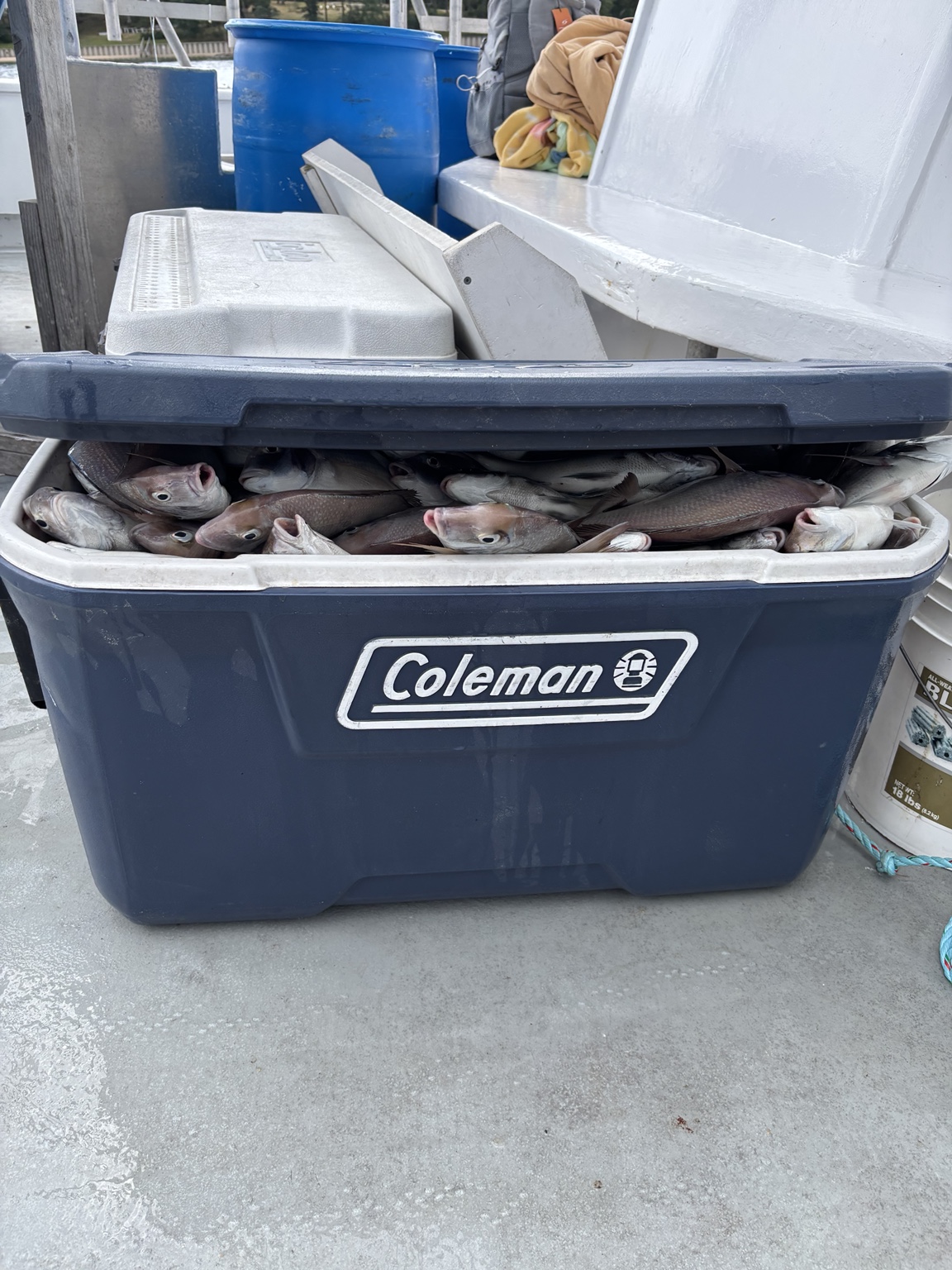
The first thing 30 porgies gives you is a feeling of success
A party boat trip is not free. Between the fare, tip, gas, snacks, drinks, and the early morning, you are investing real time and money into the day.
When the fishing is slow, you can still enjoy being on the water, but the ride home feels different. I have had those trips: chilly weather, rain, slow action, kids getting bored, and barely anything worth keeping. You still went fishing, but you do not come home with the same sense of accomplishment.
When you catch a lot of legal porgies, the day feels completely different.
You got fresh air. You spent hours on the water. You worked for the fish. You watched the cooler fill. And now you are bringing home food.
That matters. A full cooler turns the trip into something more than recreation. It becomes dinner, freezer meals, neighbor gifts, and a memory your family keeps eating long after the boat returns.
Do not wait until you get home to start planning
If the fishing is good, start thinking about the fish before the trip ends.
On many party boats, the crew will ask how you want your fish cleaned. Whole or filleted is not a small decision. It determines what your next few meals look like.
Whole fish are best if you want to grill, roast, or broil porgies with lemon and herbs. Fillets are better for ceviche, tacos, fried fish, nuggets, and freezer portions.
When I have a big catch, I usually want some of both.
Step 1: Eat some fresh that night
The best fish is often the fish you eat the same day you catch it.
After a long party boat trip, everyone is tired. The first thing we do when we get home is shower because we smell like bait, fish, sunscreen, saltwater, and the boat. After that, the day slows down. People relax, nap, watch TV, or just sit for a while.
Then comes the best part: cooking fish that was swimming only hours earlier.
If I have whole porgies, I like to cook at least one or two that night with lemon, rosemary or oregano, garlic, olive oil, salt, and pepper. It is simple, but that is the point. Fresh porgy does not need much.
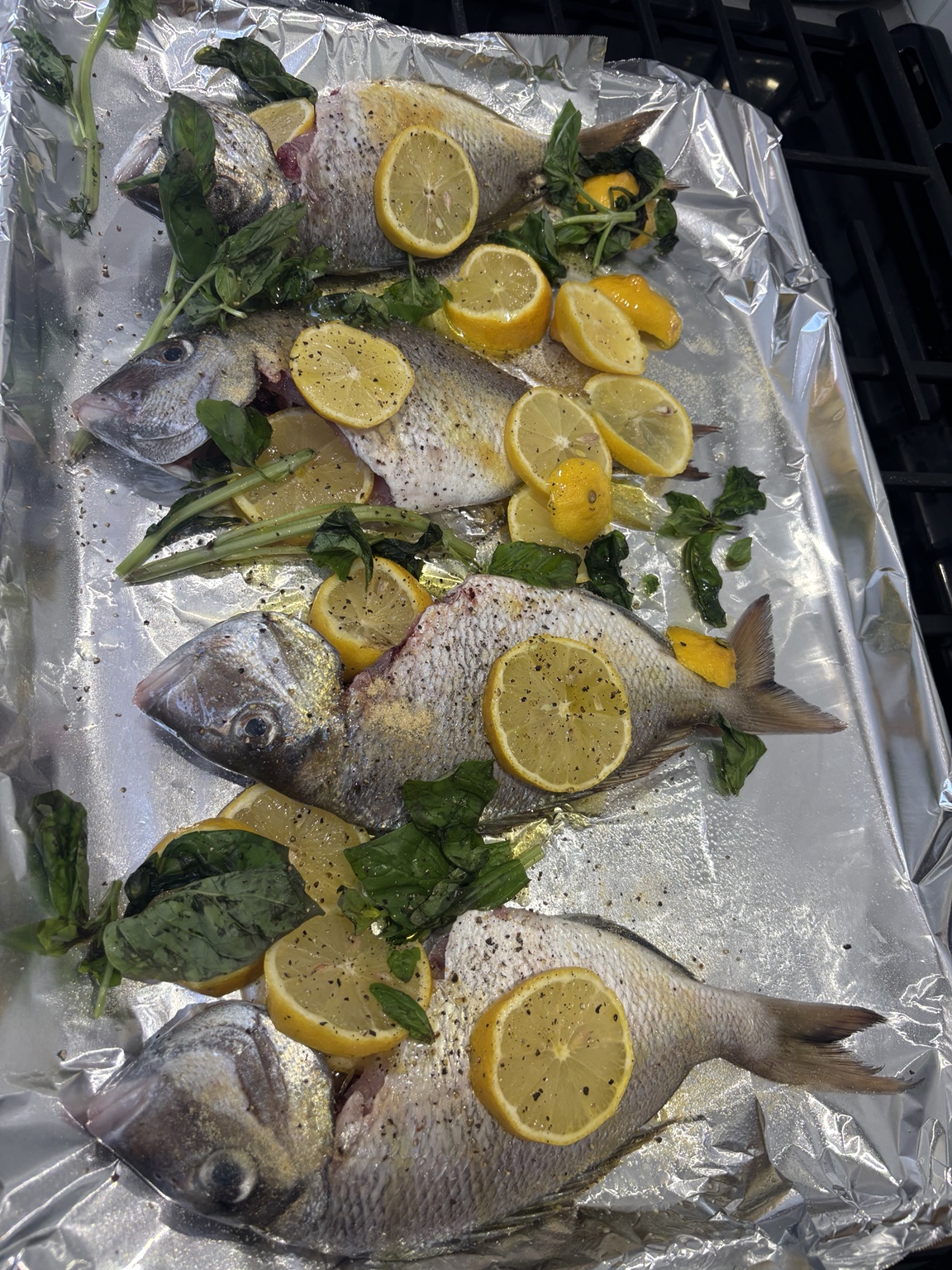
Why whole fish should be part of the plan
Whole porgy is the preparation that first made me respect the fish.
The first porgy I really remember eating was at a local Greek restaurant on Long Island. It was served whole with sliced tomatoes, cucumber, olive oil, vinegar, and fresh oregano. It was simple and excellent.
That meal made me realize that porgy can deliver the same kind of simple whole-fish experience people associate with restaurant branzino or other Mediterranean-style fish.
So when I come home with a lot of porgies, I do not want every fish turned into fillets. Some deserve to stay whole.
Step 2: Use the freshest fillets for ceviche
Porgy ceviche is one of my favorite uses for fresh fillets.
Smaller fillets work especially well because they are easy to cut into bite-size pieces. The fish is mild, clean, and perfect with citrus, red onion, avocado, tomatoes, and herbs.
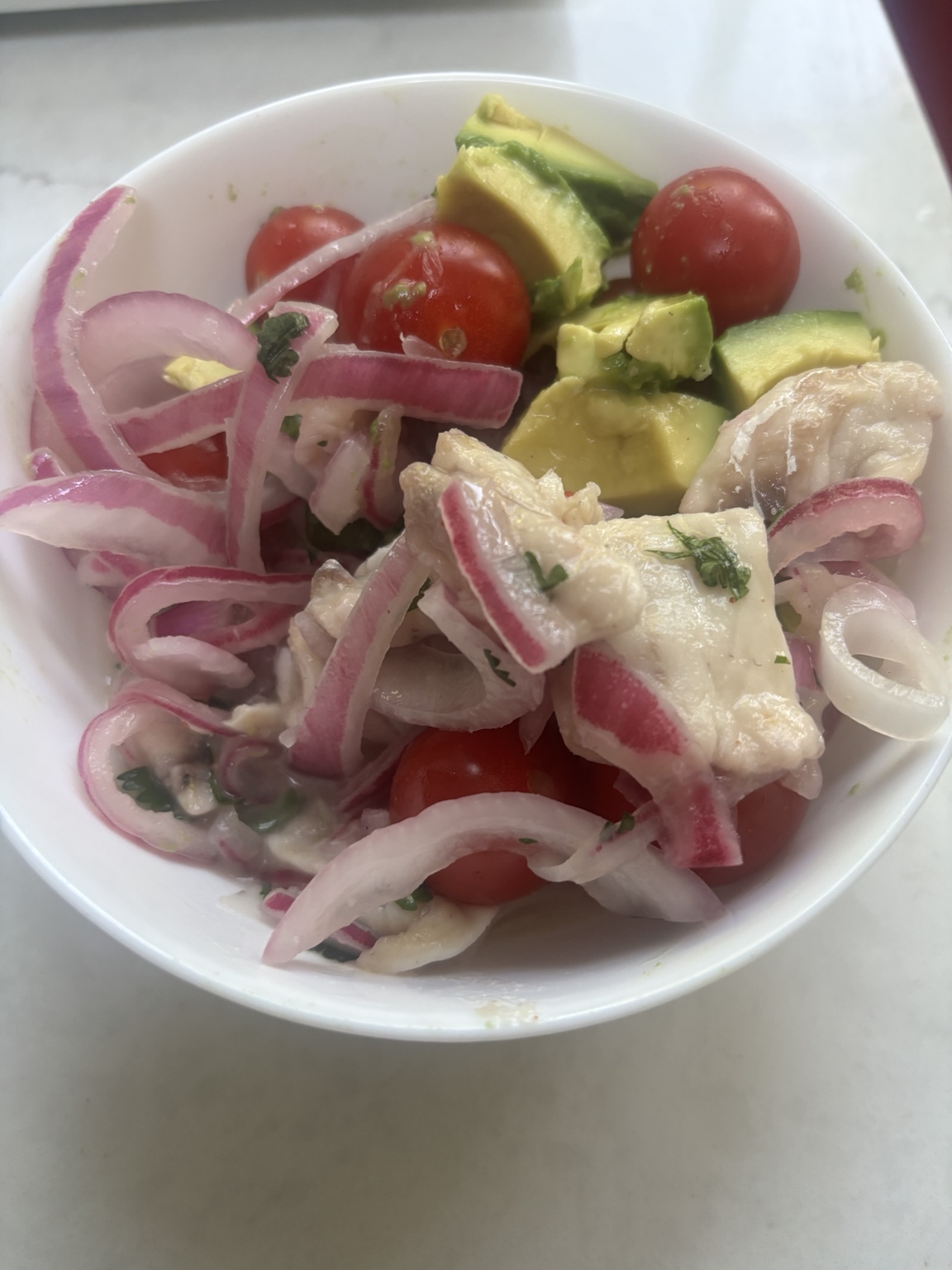
Ceviche should be handled carefully. Use very fresh fish, keep it cold, work cleanly, and use good judgment. But when the fish is fresh and properly handled, porgy ceviche is bright, clean, and genuinely impressive.
If someone in your house thinks porgy is only a fish to fry, ceviche may change their mind.
Step 3: Plan fish tacos before everyone eats all the fillets
Porgy fish tacos are another easy win.
The fillets are mild enough to take seasoning well and sturdy enough to pan-cook or fry. Lime, avocado, tomato, onion, slaw, hot sauce, and simple spices all work.
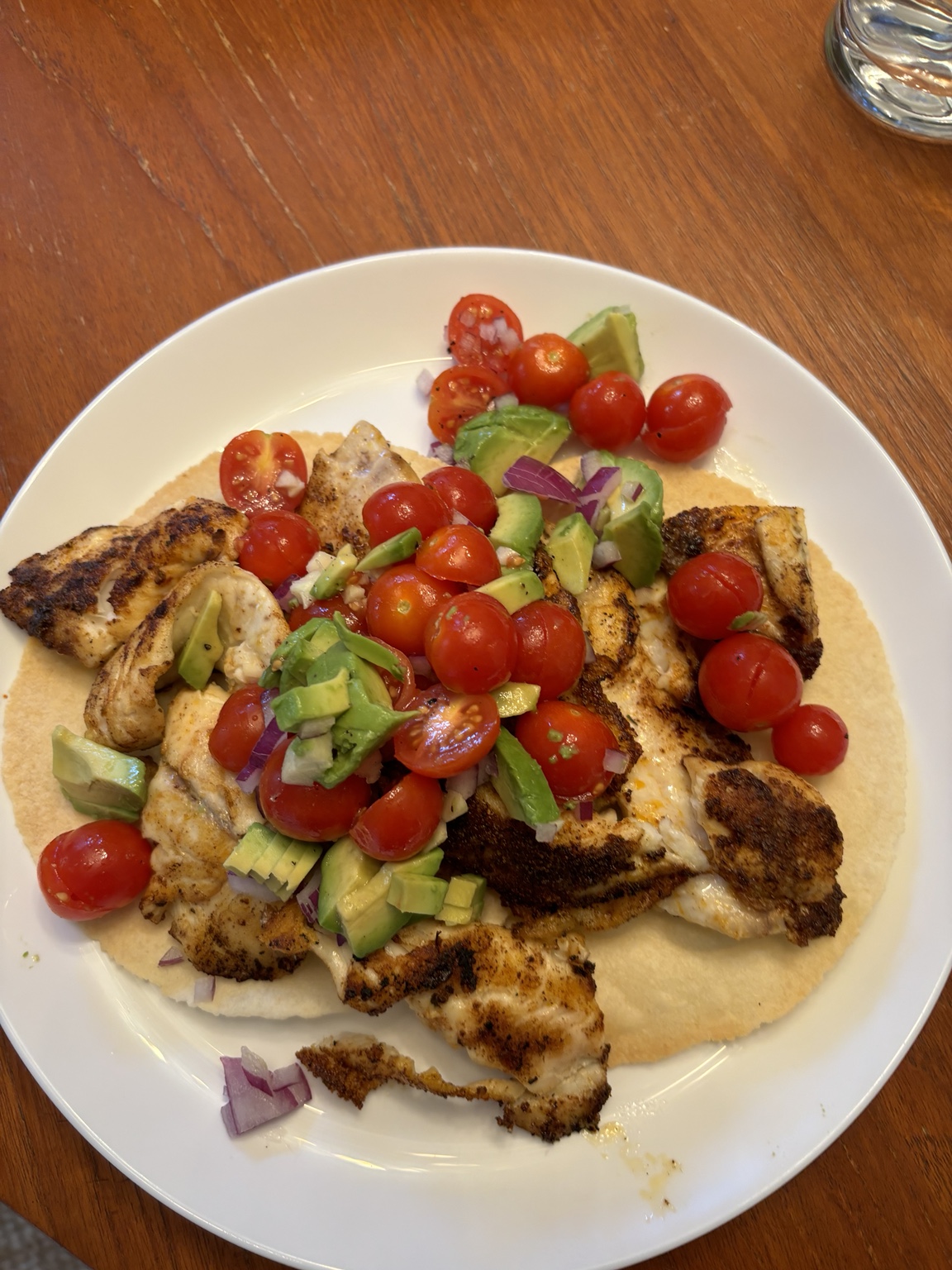
When you have 30 porgies, it is easy to set aside enough fillets for tacos. That is one of the advantages of a big catch: you do not have to choose only one preparation.
Some fish can be whole. Some can be ceviche. Some can be tacos. Some can be fried. Some can go into the freezer.
Step 4: Make the beer-battered porgy nugget project
The most memorable thing my family has ever done with a large porgy catch was turn it into beer-battered porgy nuggets.
This was not just dinner. It became a full family project.
We had enough fish that the kitchen turned into a production line. There was a station for trimming and checking the fillets. There was a station for dredge and batter. There was a station for frying. There was a station for cooling. Then there was the vacuum sealing station.
We fried the porgy pieces in avocado oil. I am not pretending fried fish is health food, but the avocado oil gave us a clean result and held up well to the heat.
The fish came out crisp, mild, and perfect for nuggets or tacos.
Why the family project matters
What I remember most is not only the taste. It is the process.
Everyone was involved. Someone handled fish. Someone worked the batter. Someone watched the fried pieces come out. Someone helped organize the vacuum bags. Someone labeled portions.
That kind of cooking turns a fishing trip into a shared family accomplishment.
It is one thing to bring home fish and cook dinner. It is another thing to have the whole family working together to turn a big catch into meals for months.
Step 5: Vacuum seal in real meal portions
Vacuum sealing changed how I think about big catches.
If you have a lot of porgy, do not freeze it randomly. Think in meals.
Portion the fish in amounts your household will actually use. Label the bags. Add dates. Separate cooked fish from raw fish. Keep everything organized so you are not guessing months later.
With the fried porgy nuggets, we let them cool, portioned them into bags, vacuum sealed them, labeled them, and put them in the freezer.
That turned one good fishing trip into many easy winter meals.
Step 6: Reheat smartly
The air fryer became the easiest way for us to reheat frozen cooked porgy nuggets.
They came back crisp enough to be enjoyable and made easy meals when nobody wanted to cook from scratch.
Every time we pulled out a bag, it reminded us of the trip. That is one of my favorite things about freezing fish you caught yourself. Months later, the food still carries the memory.
Raw or cooked: which should you freeze?
Both can work.
If you freeze raw fillets, you have more flexibility later. You can make tacos, pan-cook them, fry them, or use them in other dishes.
If you freeze cooked fried pieces, you are creating convenience meals. That is less flexible, but very useful.
With 30 porgies, I like having both options if possible.
Step 7: Give some fish away
One of the best parts of catching a lot of porgies is sharing them.
We often give fish to neighbors. Our neighbors with kids get excited when we come home with extra fish. They grill it, bake it, and genuinely enjoy it.
That is part of the satisfaction. A good fishing day becomes dinner for more than one household.
Fresh local fish is a great thing to share, especially when you have more than you can reasonably eat right away.
Do not keep fish without a plan
A big catch is only a good thing if you use it.
I do not believe in keeping fish just to fill a bucket or take a photo. If a fish is undersized, it goes back. If regulations do not allow keeping it, it goes back. If you already have more than you can use, be responsible.
But if you have legal fish and a real plan to cook, freeze, or share them, porgies are absolutely worth keeping.
What 30 porgies can become
A full limit is not just a pile of fish. It is a menu.
- Whole grilled porgy with lemon and herbs
- Porgy ceviche
- Porgy fish tacos
- Beer-battered porgy nuggets
- Pan-cooked fillets with butter and lemon
- Freezer meals for winter
- Fish for neighbors or friends
That is why I never understand when people dismiss porgies. A fish that can do all of that deserves more respect.
The economics of a good trip
When a party boat trip costs around $125 plus tip, a slow day can feel expensive. A great day feels different.
If you come home with enough fish for multiple meals, the cost of the day becomes part recreation and part food value.
You are not buying grocery-store fish. You are buying a day on the water, time with your kids, fresh air, scenery, and the chance to bring home wild fish you caught yourself.
That is why a full cooler feels so satisfying.
The physical feeling after a big porgy day
After a strong trip, you feel it.
Your arms are tired. You have been standing, reeling, baiting hooks, balancing with the boat, and dealing with the motion of the water all day.
You feel like you did something.
That makes the meal later feel even better.
What kids learn from a big catch
For kids, a big catch teaches that fishing is not only about catching.
They see the full chain: wake up early, go to the boat, fish, bring fish home, clean up, cook, freeze, share, and eat.
That connection between effort and food is valuable.
When my kids help cook or pack fish, the trip becomes more than a day on the water. It becomes part of how they understand food.
My personal order of operations
If I came home today with 30 porgies, this is how I would handle it:
- Shower first, because everyone smells like bait and fish.
- Put the fish on ice or in the refrigerator while deciding the plan.
- Cook one or two whole fish fresh that night.
- Reserve the freshest fillets for ceviche.
- Set aside fillets for fish tacos.
- Fry a batch if we have enough time and energy.
- Vacuum seal raw or cooked portions for future meals.
- Give some fish to neighbors if we have more than enough.
The meal that night matters
After a long day, the first meal from the catch is special.
It does not have to be complicated. In fact, it probably should not be. Whole fish with lemon and herbs, tacos, or simple fried pieces are enough.
The flavor is partly the fish and partly the story of the day.
You are eating something you caught that morning.
Why this page exists
Most fishing advice stops at catching the fish.
But for me, the most satisfying part of porgy fishing is what happens afterward.
The boat trip becomes dinner. Dinner becomes leftovers. Leftovers become freezer meals. Extra fish becomes something you share. Months later, a frozen bag of porgy nuggets brings back a summer morning on the water.
That full loop is why I like porgy fishing so much.
Final answer: what should you do with 30 porgies?
Use them well.
Eat some fresh. Cook some whole. Make ceviche. Make tacos. Fry some. Freeze some. Share some.
Do not treat them like a problem. Treat them like the reward for a great day on the water.
Thirty porgies can be a cooler full of fish, but they can also be a season of meals and memories.
The First Thing We Do Is Not Cook Fish
People imagine coming home with thirty porgies and immediately firing up the grill. That is not how it works. The first thing we do is shower. Every time. The clothes smell like bait, the boat smells like fish, and everything smells like fishing. Before we even think about dinner, the rods get put away, the clothes head toward the washing machine, and everybody takes a shower. Only then do we start thinking about what happens next.
The Mistake I Learned Not To Make
One thing I learned over time is not to wait too long to freeze fish. If I know we are not eating certain fish immediately, those fish should get frozen sooner rather than later. The biggest mistake is letting fish sit around because you think you might use them tomorrow. Then tomorrow becomes the next day. Before long, the quality is not what it should be.
Why We Don't Wash Them Right Away
The fish are cleaned immediately, usually on the boat. But we do not rinse everything with fresh water the moment we get home. If a fish is already cleaned and headed into the refrigerator, we leave it alone until it is time to cook. We wash it right before preparation. That approach has consistently worked better for us than constantly handling the fish as soon as we get home.
What Actually Happens To Thirty Porgies
Some get eaten immediately. Usually five or six fish become dinner in the next day or two. Some get shared. Some get frozen. Some become tacos. Some become nuggets. Some become ceviche. A catch that size rarely becomes one giant meal. It becomes multiple meals spread over time.
Giving Fish Away Is Part Of The Fun
When we come home with a truly good catch, we almost always give some away. Fresh fish is better shared. One of my favorite parts is seeing the reaction from neighborhood kids who want to know what was caught. They get excited to see the fish and hear about the trip. Watching that excitement reminds me why fishing was so much fun when I was younger.
How Long Thirty Porgies Last
If we are eating fish regularly, thirty porgies can provide meals for weeks. Earlier in the season we make more tacos. Toward the end of summer we often make larger batches of nuggets and freeze them. A successful fishing trip in August can still be feeding the family well into the fall.
Why I Never Regret Keeping Them
People sometimes ask whether I regret keeping that many fish. Honestly, no. We always find a use for them. We eat them, freeze them, share them, make tacos, make nuggets, and sometimes make ceviche. The fish never feel wasted. If anything, the challenge is deciding which meal to make first.