Long Island Porgy Fishing Guide: Greenport, Party Boats, Kids, Bait, and Cooking the Catch
If somebody asked me for the best way to start saltwater fishing on Long Island, I would tell them to fish for porgies. And if they only had one day, I would probably tell them to get on a good East End party boat out of Greenport.
That is not a generic answer. It comes from years of fishing around Long Island, bringing my kids on party boats, fishing from shore, catching good days and bad days, watching my younger son become obsessed with fishing, and bringing home porgies that became whole fish dinners, ceviche, tacos, fried nuggets, freezer meals, and fish for neighbors.
Most porgy fishing guides start with rigs, hooks, bait, and regulations. Those things matter, and this guide covers them. But the reason Long Island porgy fishing is so good is not only technical. It is the full experience: the alarm before sunrise, the coffee stop, the marina smell, the ride out, the first drop, the tap of a bite, the surprise fish, the cleaning table, the shower when you get home, and the meal later that night.
Porgy fishing is one of the rare saltwater fishing experiences that works for beginners, kids, families, and experienced anglers at the same time. It is accessible without being boring. It is productive without being likely. And when the day goes right, it feeds you.
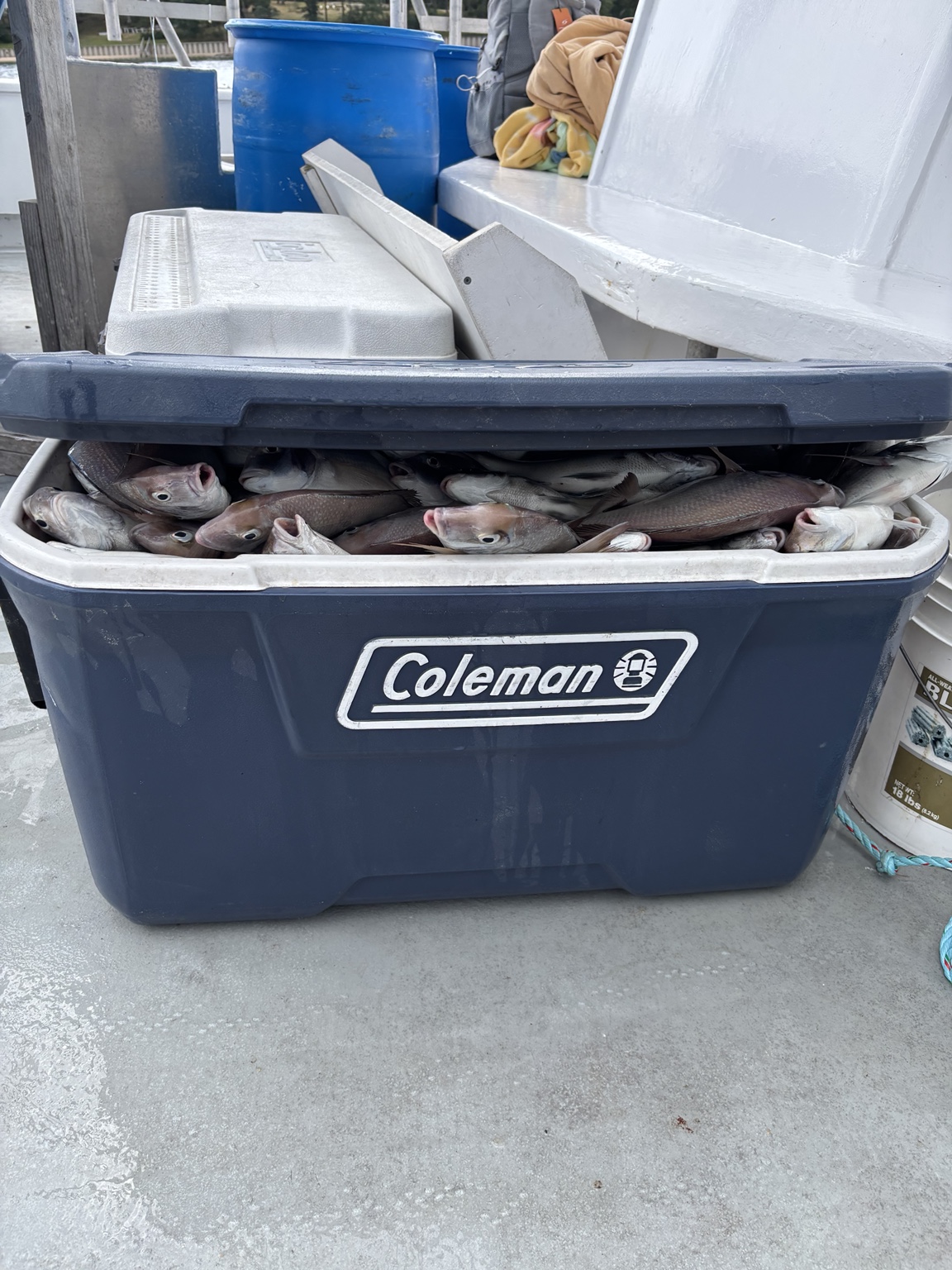
Why Long Island is such a strong porgy fishery
Long Island gives anglers access to a mix of bays, sounds, harbors, rocky bottom, reefs, wrecks, inshore structure, and productive current. Porgies thrive around that kind of habitat. During the season, there are enough opportunities that a beginner has a real chance of success while experienced anglers can still have a serious day.
That balance is what makes porgies special. Some fish are exciting but difficult for beginners. Some fish are easy but not very satisfying. Porgies sit in a sweet spot. They are common enough to target consistently, but still fun enough that a good bite gets the whole boat excited.
For families, that matters. Kids need something to happen. Beginners need feedback. A porgy bite gives them that. A fish coming over the rail gives them proof that the process works.
East End versus western Long Island
My own experience has been dramatically better on the East End than in western Long Island waters. That does not mean nobody catches porgies in western Long Island. They do. It means that if I am choosing one trip for the best chance of a strong family fishing day, I am heading east.
Some of my slowest trips have been farther west. The worst porgy trip I remember was around western Long Island near the Throgs Neck area. It was rainy, chilly, and uncomfortable from the start. We fished for hours, maybe from the morning until early afternoon, and barely caught anything. Maybe one small fish. Maybe one keeper at most. Mostly nothing.
The weather was not even the worst part. The worst part was the lack of action. When nothing is happening, the whole day slows down. Kids get bored. Adults start checking the time. People stop talking about what they are going to cook later because there may not be anything to cook.
That kind of day teaches you why location and captain judgment matter so much.
By contrast, many of my best days have happened around Greenport, Southold, Orient, East Marion, Shelter Island, and Peconic Bay. Those trips have produced full buckets, excited kids, surprise catches, and enough fish to create meals long after the trip ended.
Why Greenport became my favorite starting point
If someone from out of state had one day to try Long Island porgy fishing, I would tell them to go out of Greenport.
Greenport has the right mix of fishing, scenery, and local character. The harbor is beautiful in the morning. The ride out feels like part of the trip rather than just transportation. The surrounding waters can be very productive. And the town itself feels connected to the water in a way that makes the whole day more memorable.
A good Greenport porgy day is not just “stand on a boat and catch fish.” It is a complete day. You wake up early, drive to the dock, watch the harbor come alive, fish around some of the prettiest waters on Long Island, bring fish home, shower off the smell of bait and salt, and then cook what you caught.
The perfect Greenport porgy day
The trip starts the night before. We pack the bag because nobody wants to be looking for sunscreen, hats, sweatshirts, snacks, chargers, or towels at five in the morning. If kids are coming, I also make sure they have something to do during the ride out or a slow stretch. A fishing trip can be long, and a kid who can take a break is more likely to come back excited when the bite turns on.
The alarm goes off early. I wake up, wake whichever kid or kids are coming, and get everyone moving. Then comes the coffee stop. At that hour, it is usually Dunkin' or 7-Eleven. I get coffee. The kids get a croissant or breakfast sandwich. It is not fancy, but it has become part of the ritual.
When we get to the marina, the day feels different. The air is cooler. The harbor is usually calm. Boats are tied up but starting to wake up. People are carrying coolers, food bags, and coffee cups. Some look like regulars. Some look like first-timers.
The marina smell is part of the memory: saltwater, diesel, bait, coffee, and early morning air. Later the day will smell like clam bait, fish, sunscreen, and the cleaning table. But at the beginning, it smells like possibility.
The captains matter more than beginners realize
A good captain is not just someone who drives the boat. A good captain shapes the entire day.
My favorite current East End boat is the Tide Hustle, run by Captain Paul and Captain Rachel. They are knowledgeable and experienced, but that is only part of it. They are patient, funny, good with kids, and good with beginners. They remember people. They give tips. They do not make you feel foolish if you tangle a line or miss a bite.
That matters on a family fishing trip. The best crews keep the day calm and enjoyable even when the fishing slows or the lines tangle.
On western Long Island, Captain Kenny on The Angler has always impressed me for similar reasons. He is calm, approachable, easy to communicate with, and especially good with kids. A captain like that can make a trip feel welcoming instead of intimidating.
Party boats versus shore fishing
I have caught porgies from shore, especially on the East End, and I have had success using salted clams. Shore fishing can be peaceful, inexpensive, and satisfying. If you live nearby and enjoy figuring things out, it has its place.
But if your goal is to maximize the chance of catching porgies, especially with kids or first-timers, I prefer party boats.
The biggest reason is mobility. From shore, you are waiting for fish to come to you. On a boat, the captain can go to the fish. If one spot is dead, the boat can move. If the tide changes, the captain can adjust. If the first drop is slow, there is still a plan.
Party boats also remove friction. The bait is there. The rods are there. The tackle is there. The crew is there. If something goes wrong, someone can help. That convenience is especially valuable when you are bringing kids or introducing someone new to fishing.
What bait works best for Long Island porgies?
For me, the answer is clams.
I have had the best luck with clams from shore and on boats. From shore, salted clams have worked well. On party boats, the standard clam bait they provide is usually exactly what you need.
The important thing is not to overload the hook. Porgies are good bait stealers. If you use too much bait or bury the hook completely, you may feel taps all day and miss fish. Use enough bait to attract them, but not so much that the hook cannot do its job.
The basic porgy setup
Beginner porgy fishing does not need to be complicated. A simple high-low bottom rig, small porgy hooks, enough weight to hold bottom, and clam bait will catch fish when porgies are around.
The technique is straightforward: bait the hooks, drop to the bottom, stay in contact with the bottom, feel for taps, and reel when the fish is on.
But “straightforward” does not mean instant. The learning curve is in the feel.
What a porgy bite actually feels like
Beginners often expect a dramatic strike. Porgies are often subtler than that.
A bite may feel like quick taps, pecks, or little bumps through the rod. Sometimes you are not sure whether you are feeling a fish, current, bottom, or the boat moving. After a while, your hands start to understand the difference.
This is one reason rod sensitivity matters. I used to think rods did not matter that much for porgy fishing. Then I fished with lighter, more sensitive rods and realized how much more information they give you. You can feel bottom better. You can feel the bite better. You can learn faster.
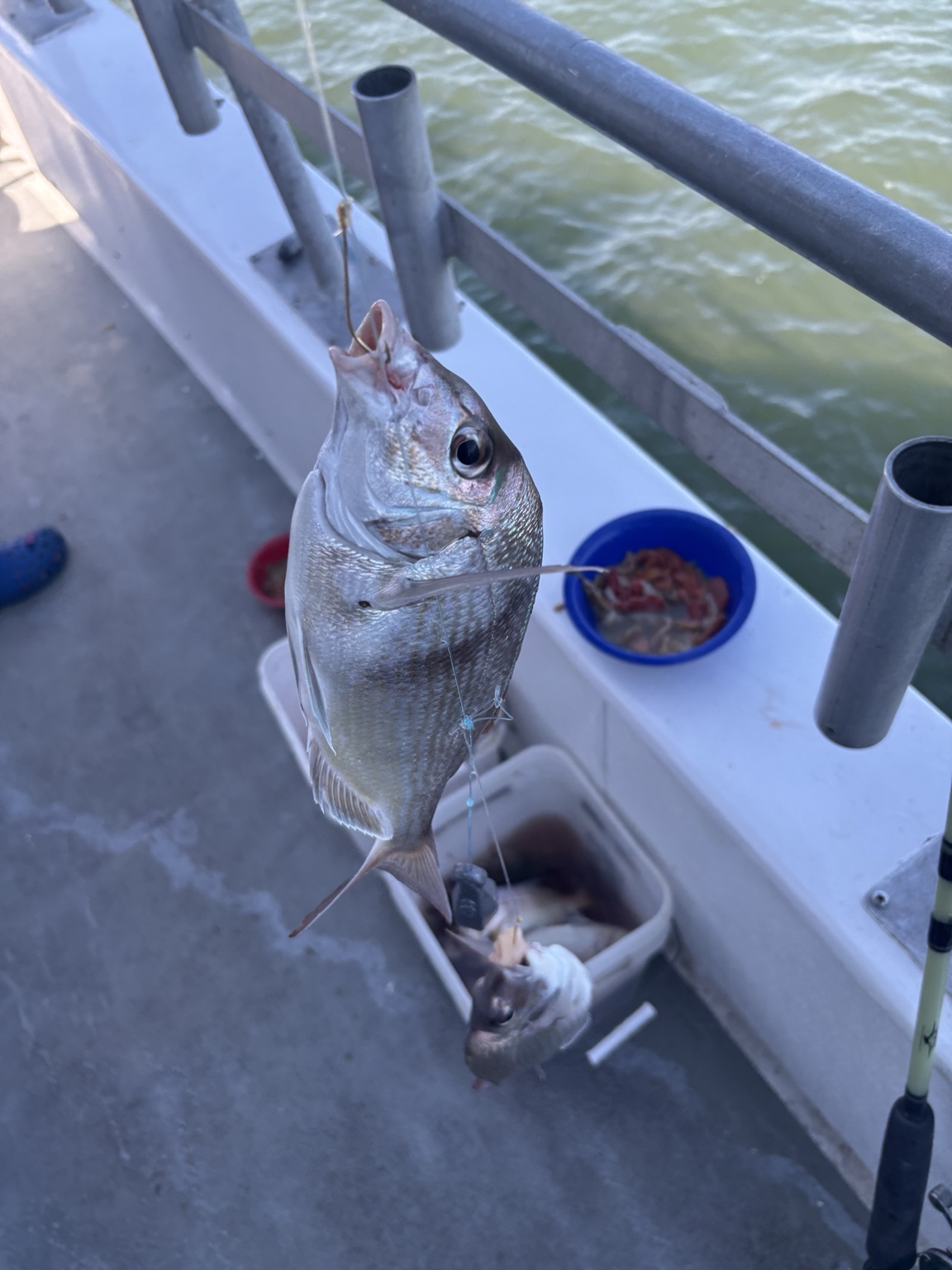
When the bite turns on
When the fishing is good, the whole boat changes. People start reeling. Kids shout. Buckets fill. The crew moves constantly. Someone catches the first fish, then someone else, then suddenly everyone is paying closer attention.
Those are the moments that hook beginners. A child who was bored ten minutes earlier suddenly wants to fish every drop. Adults who were chatting casually start focusing on the rod tip.
On the best days, the rhythm becomes addictive: bait, drop, tap, reel, fish, bucket, rebait, repeat.
When the bite is slow
Slow fishing is part of the deal. Even on good boats, even with good captains, even in good areas, there are dead periods.
An hour can pass with only a few fish coming up. Kids may take breaks. Adults may snack or talk. The captain may move. Sometimes everything changes after a tide shift or a new spot. Sometimes it never really turns on.
That is why expectations matter. Fishing is not a likely grocery run. It is a day with possibilities.
The fish that changed everything for my family
The most important porgy I have ever seen caught was not the biggest fish. It was the first porgy my younger son caught on a Greenport party boat when he was still under ten.
That fish changed the way he saw fishing. Before that, fishing was something I liked. After that, it became something he liked.
He wanted his own rod. He started watching fishing videos. He researched local fish. He wanted to learn more. He brought friends on trips. He became proud of knowing things and explaining them to other kids.
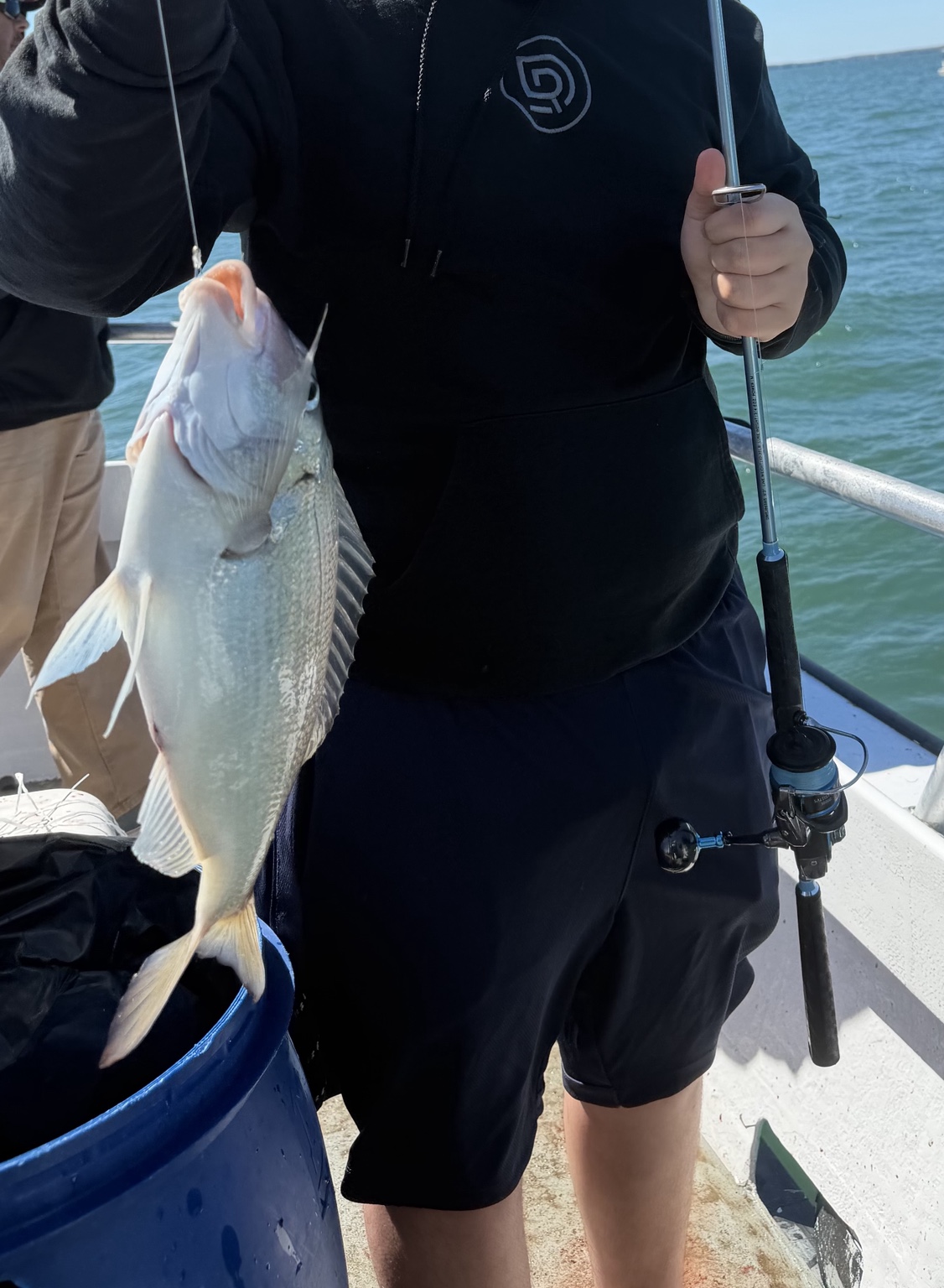
Fishing feels like a treasure hunt
The best way I can describe fishing is that it feels like a treasure hunt. You know something is down there. You just do not know exactly what.
That mystery is powerful for kids. Every drop might bring a porgy. Or a weakfish. Or a dogfish. Or a pufferfish. Or nothing. The uncertainty keeps the day alive.
My younger son got hooked partly because fishing gave him that feeling. It was not only about catching food. It was about discovering what was under the water.
What else might you catch while porgy fishing?
Porgies are not always the only fish on a porgy trip. Over the years, we have caught weakfish, striped bass, bluefish, sea robins, dogfish, pufferfish, fluke, and blackfish while targeting porgies.
Weakfish are especially memorable in our family because my younger son has caught several and I still have not. His last one was around 17 inches, and it was exciting because it felt like something larger and different from the usual porgy.
Dogfish are great for kids because they look and feel like little sharks. Pufferfish are crowd favorites because they inflate. Sea robins look strange enough that everyone wants to see them. Sometimes those surprise catches become the story of the trip.
What makes a great Long Island porgy day?
A great porgy day is not only about hitting a limit. It is a combination of things.
Good weather helps. Calm water helps. A captain who knows where to go helps. Friendly people on the boat help. Kids catching fish helps. Enough action to stay engaged helps.
The best days also have a rhythm: early start, scenic ride, first fish, steady action, some laughs, a few tangles, maybe a surprise species, fish cleaning, tired ride home, shower, and dinner.
That full arc is what makes the day memorable.
What makes a bad day?
Bad days usually have slow fishing and uncomfortable conditions. Rain, cold, chop, and boredom can make a trip feel long.
The worst part for kids is usually not the weather itself. It is the lack of action. If fish are coming over the rail, kids can tolerate a lot. If nothing is happening, even a beautiful day can feel long.
That is why I prepare for breaks. Snacks, drinks, phones, tablets, and patience can keep a slow stretch from ruining the day.
What should beginners bring?
For a Long Island porgy party boat trip, I would bring sunscreen, a hat, sunglasses, water, snacks or lunch, an extra layer, cash for tips, and a towel for your hands.
The towel is more important than beginners realize. Clam bait gets on your hands. Fish slime gets on your hands. Without a towel, you will wipe everything on your clothes.
If kids are coming, bring more snacks than you think you need and something for them to do during the ride or slow periods.
The fish cleaning table
At the end of a party boat trip, the crew often cleans fish. This is one of the underrated benefits of boat fishing.
You can usually ask for fish whole or filleted. Whole fish are best for grilling or roasting. Fillets are best for ceviche, tacos, frying, and freezing.
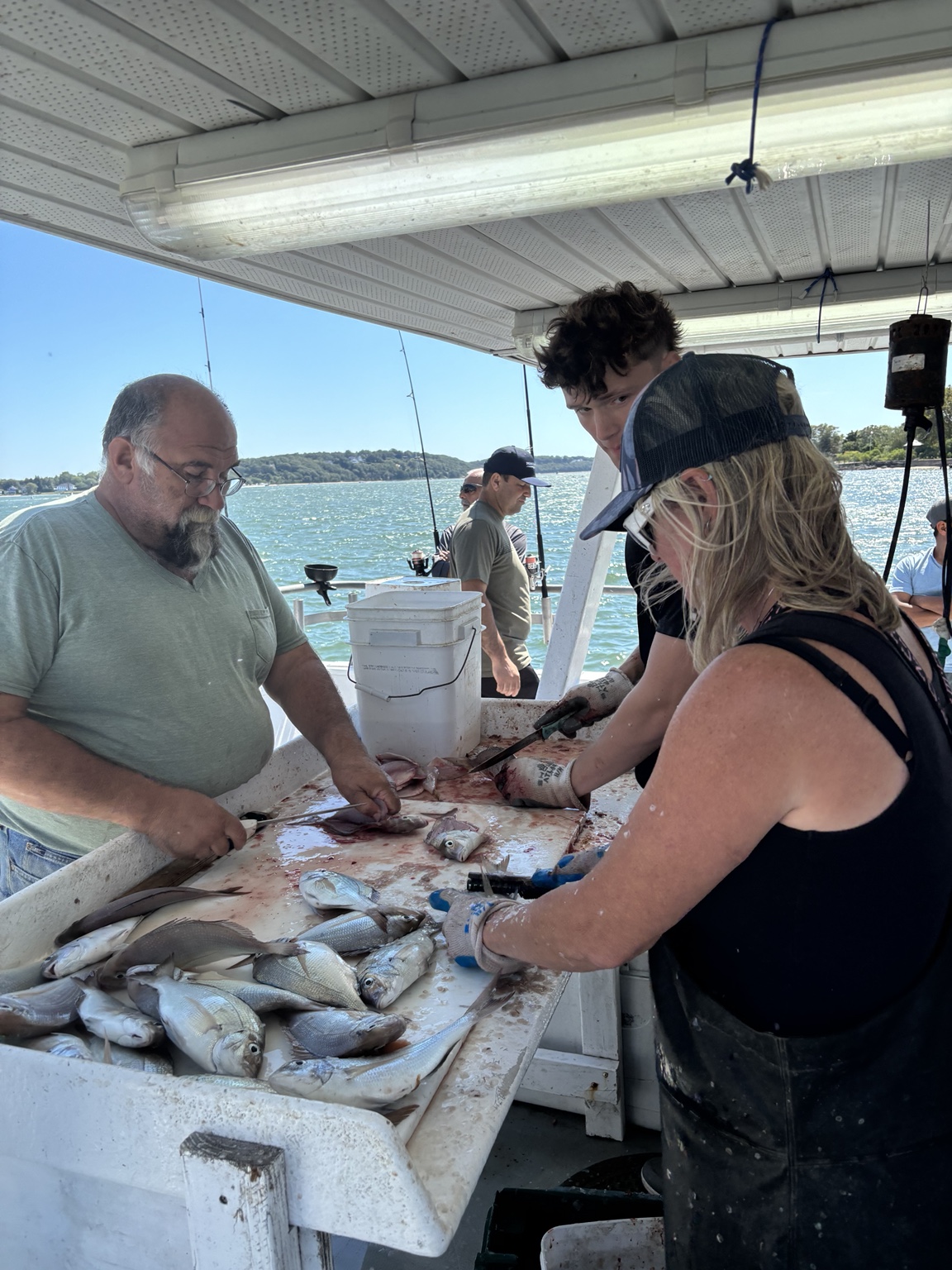
Tip the crew well. They help with bait, tangles, fish, cleaning, and the general flow of the day. They earn it.
The shower rule
When we get home from a fishing trip, everyone showers immediately.
Your clothes smell like bait and fish. Your hands smell like the day. Your sweatshirt, shoes, and hat may all carry the marina and boat with them.
It is part of the experience. But it does not belong on the couch.
Why porgies are better eating than people think
I still do not understand why some anglers dismiss porgies. Fresh porgy is excellent.
The first memorable porgy I ate was at a local Greek restaurant. It was served whole with sliced tomatoes, cucumber, olive oil, vinegar, and oregano. It reminded me of the kind of whole fish people order at Mediterranean restaurants and happily pay for.
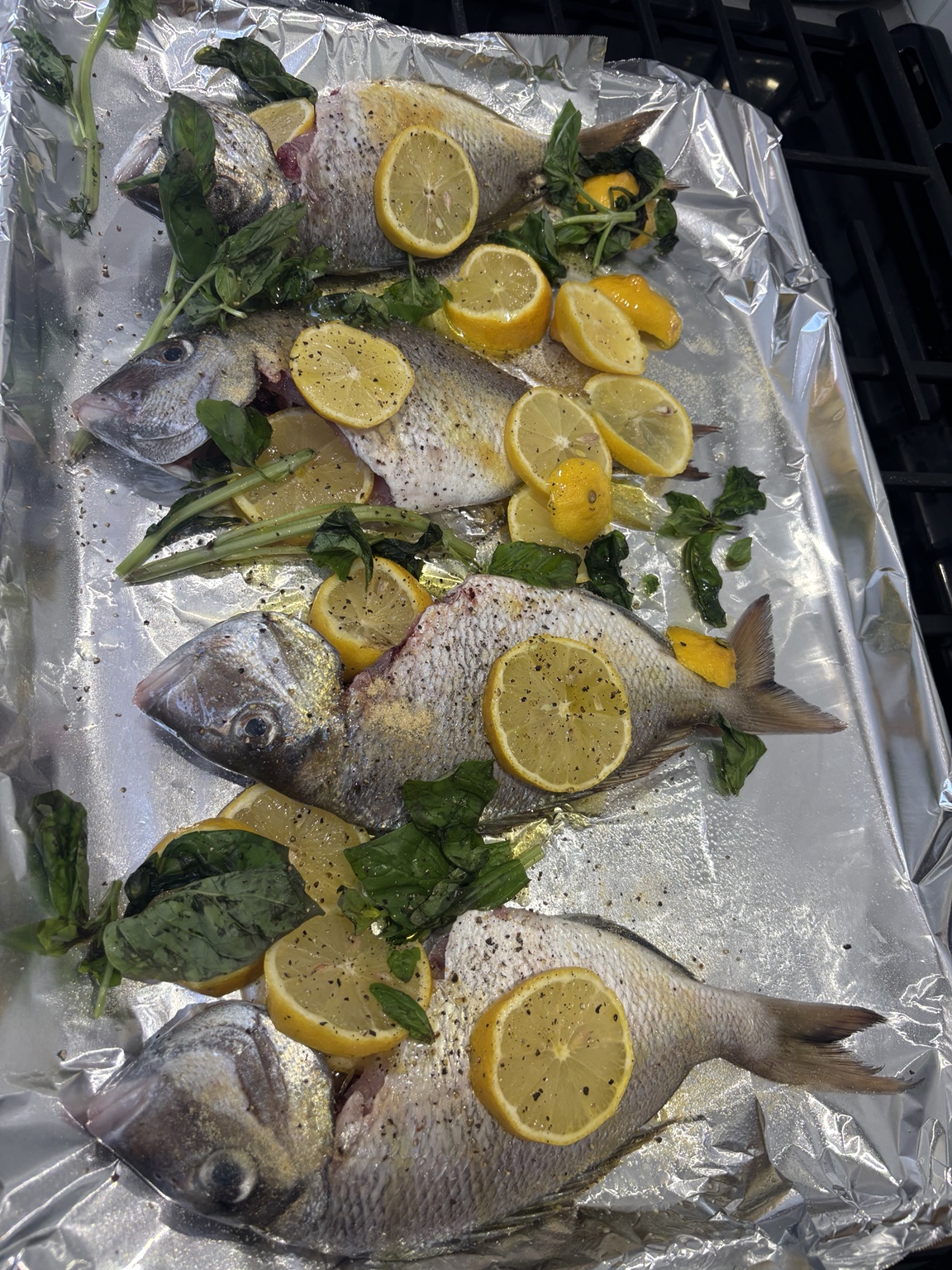
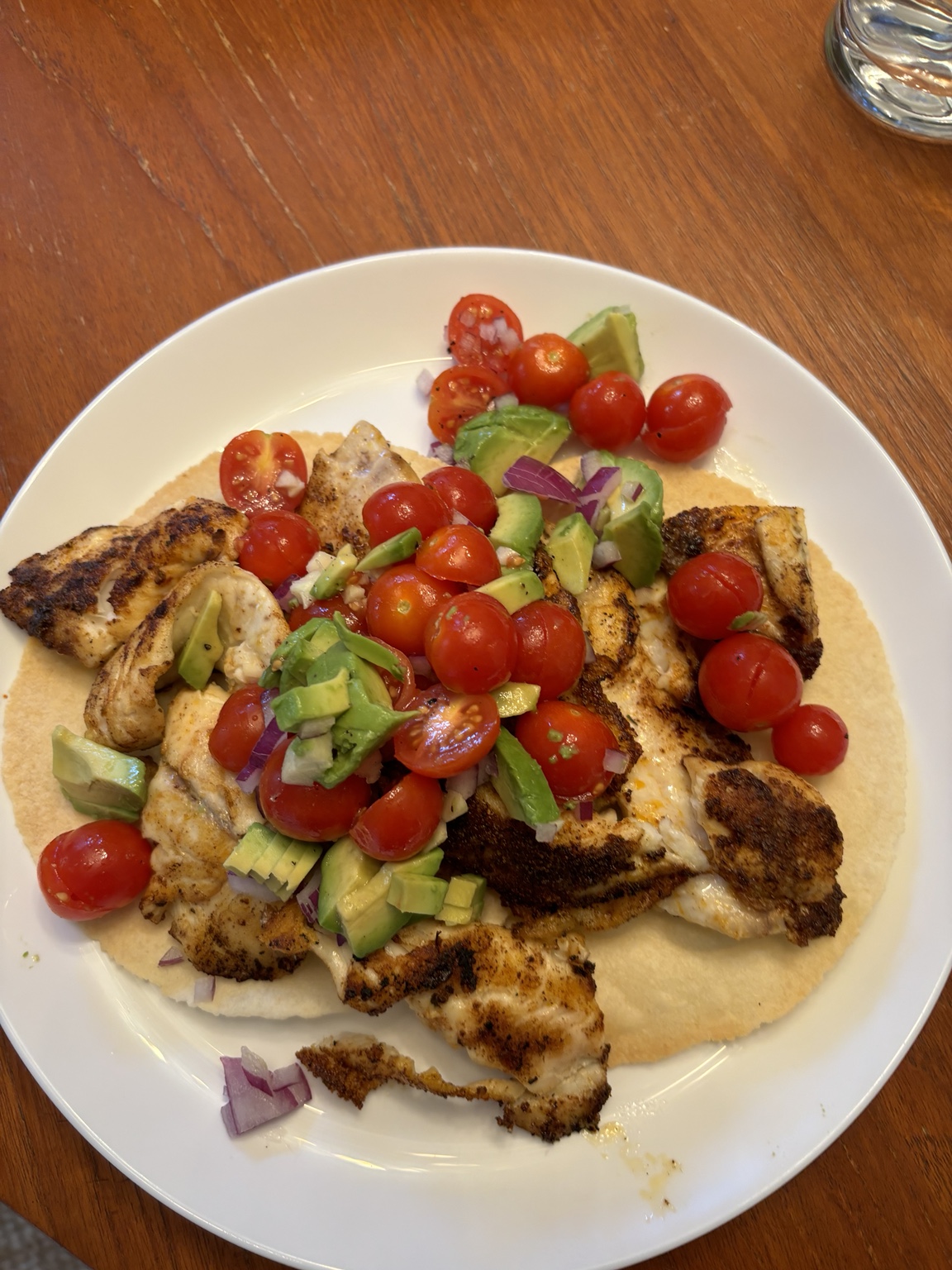
Since then, I have cooked porgies whole with lemon and herbs, made ceviche, made fish tacos, fried them, and vacuum sealed cooked nuggets for winter. The fish is mild, flaky, versatile, and far more useful than its reputation suggests.
The catch-to-table payoff
A successful Long Island porgy trip does not end when the boat gets back to the dock. It continues in the kitchen.
Some fish become whole roasted dinners. Some become ceviche. Some become tacos. Some become beer-battered nuggets. Some get vacuum sealed for future meals. Some get shared with neighbors.
One summer, we caught enough porgies that we turned a big batch into fried nuggets, vacuum sealed them, and ate them through the winter. Every bag reminded us of the trip.
Giving fish away
When we come home with a big catch, we often give fish to neighbors. Our neighbors with kids get excited when we bring fresh porgy over. They grill it, bake it, and genuinely appreciate it.
That sharing is part of the satisfaction. A good fishing day can feed more than one family.
Are porgies worth keeping?
If they are legal, in season, and you plan to use them, yes. Porgies are absolutely worth keeping.
The key is to have a plan. Do not keep fish just to fill a bucket. Keep fish because you are going to cook, freeze, or share them.
When you use them well, porgies become one of the most practical fish on Long Island.
My recommended first Long Island porgy trip
If I were planning a first porgy trip for a beginner or visiting family, I would keep it simple:
- Book a reputable East End party boat, ideally out of Greenport.
- Bring snacks, water, sunscreen, hats, and an extra layer.
- Use clam bait.
- Listen to the crew.
- Focus on staying near bottom and learning the bite.
- Expect some tangles and slow stretches.
- Keep legal fish only if you plan to eat them.
- Cook some of the catch fresh that night.
Why I keep coming back
I keep going because every trip offers something different.
Sometimes it is the fishing. Sometimes it is watching a child catch a fish. Sometimes it is the surprise dogfish or pufferfish. Sometimes it is the ride out of Greenport Harbor. Sometimes it is a cooler full of porgies and a kitchen full of plans.
The fish matter, but the memories matter more.
Final thoughts
Long Island porgy fishing is one of the best family-friendly saltwater fishing experiences in the Northeast. It is approachable for beginners, fun for kids, productive enough to be exciting, and connected to some of the best catch-to-table meals you can make from local waters.
Start simple. Choose a good boat. Bring the right expectations. Learn the bite. Enjoy the scenery. Respect the fish. Cook what you keep.
That is the real Long Island porgy fishing experience.
Local Knowledge
Conditions change from year to year, but productive porgy fishing usually revolves around structure, current, and bait availability. Checking recent reports from local boats can help confirm where fish are concentrated before a trip.
Arriving early, bringing a simple backup rig, and paying attention to depth changes often improves results more than constantly changing tackle.