Why I Prefer Party Boats to Shore Fishing
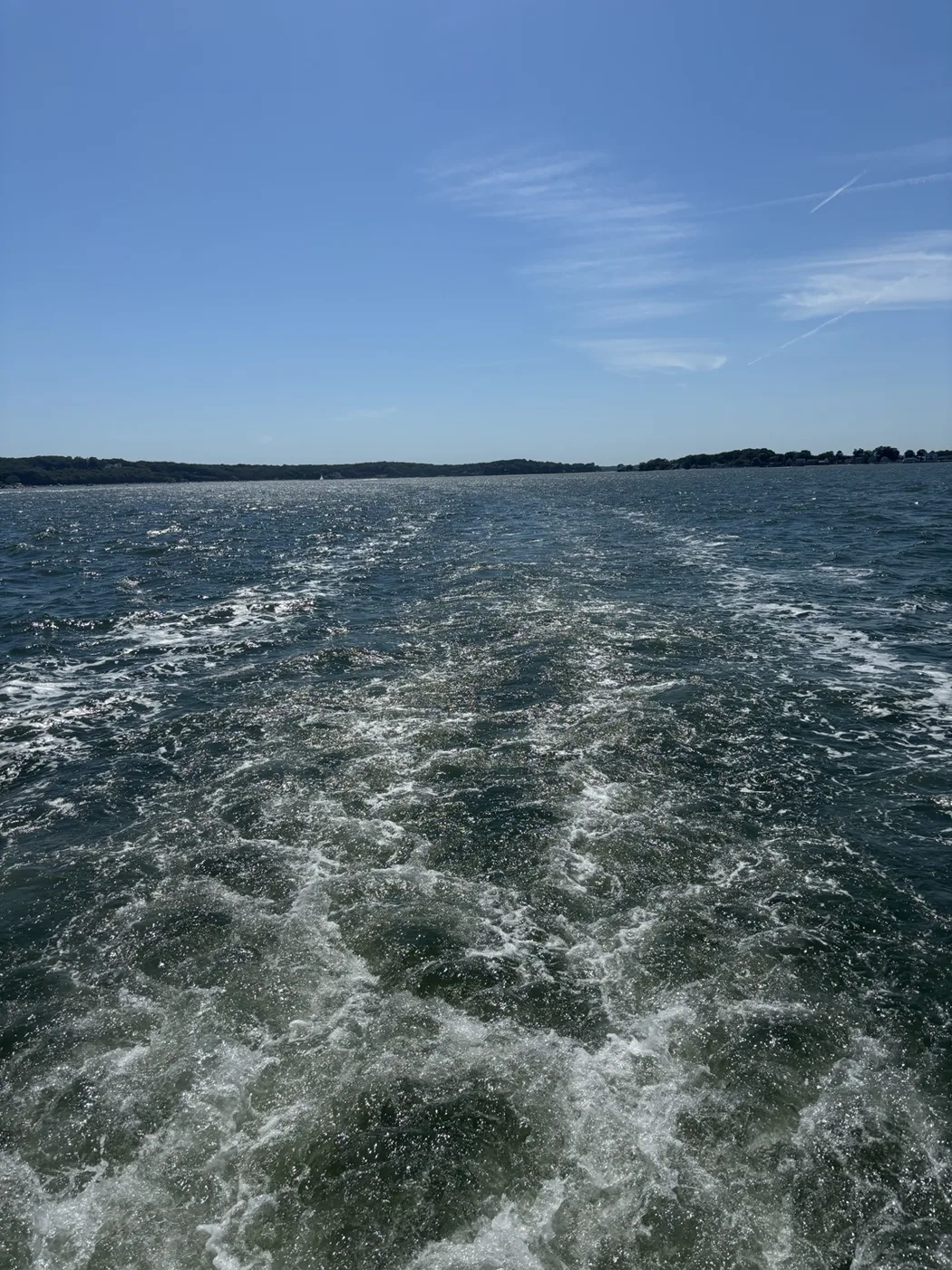
If somebody asks me whether I would rather spend a day fishing from shore or spend a day on a party boat, I choose the party boat almost every time.
That answer surprises some people.
On paper, shore fishing has a lot going for it. It is cheaper. It is easier. You do not have to reserve a spot. You do not have to wake up before sunrise. You can fish for an hour instead of committing an entire day. You can decide at the last minute to grab a rod, get some bait, and see what happens.
I understand every one of those advantages because I still fish from shore sometimes.
But after years of fishing around Long Island, bringing my kids on trips, learning from captains, cooking the fish we catch, having unforgettable days, and having a few miserable ones, I eventually realized something: I am not really comparing two ways of catching fish. I am comparing two completely different experiences.
When I look back on the fishing memories that matter most to me, almost all of them happened on boats. Not because the fish were always bigger. Not because the fishing was always better. Because the entire day was better.
The Trip Starts the Night Before
One thing I love about party boats is that the trip starts before anybody catches a fish.
The night before, we pack.
That sounds like a small thing until you have done enough trips to understand how important the little things become. Do we have sunscreen? Do we have enough water? Did somebody pack a sweatshirt? Are the phones charged? Did anybody remember snacks?
Fishing trips have taught me that snacks solve an amazing number of problems, especially when kids are involved. A slow bite feels less frustrating when nobody is hungry. A long ride out feels easier when everyone has something to drink. A chilly morning is less annoying when somebody remembered an extra layer.
The preparation creates anticipation. Everybody knows tomorrow is not a normal day. Tomorrow is a fishing day.
A shore fishing trip often happens because I suddenly have a free hour. A party boat trip feels like an event.
The Coffee Stop
The alarm goes off at an hour that nobody enjoys.
For a few seconds, everybody questions the decision. Then people remember why they are getting up.
The coffee stop comes next. That stop has become part of the ritual. I get coffee. The kids get breakfast sandwiches or pastries. Everybody wakes up slowly.
The drive east becomes part of the experience instead of simply transportation. When I think about my favorite fishing trips, that coffee stop is always there. It is not dramatic. It is not the kind of thing that shows up in fishing reports. But it is part of the memory.
The fishing trip has already started.
A Greenport Morning Feels Different
Many of my favorite fishing memories happened out of Greenport.
The Greenport mornings are the part I think about first. Not the biggest fish. Not the final count. The morning.
There is something about arriving at the harbor before the day has fully started. The town is still quiet. The air is cool. People are carrying coolers and coffee, walking toward boats with that mix of sleepiness and anticipation that only early fishing trips seem to create.
The crews are already working. Bait is being organized. Rods are being checked. Coolers are being loaded.
People who have done this many times look calm and settled. First-timers look around trying to figure out where to stand, what to carry, and what happens next. Kids are half-awake but curious. Adults are pretending they are less tired than they are.
And underneath all of it is the same question: what kind of day are we about to have?
The smell is part of the memory: saltwater, diesel, coffee, bait, cool morning air. Years later, those smells still remind me of fishing trips.
That is one reason I prefer party boats. The experience starts before the fishing starts. By the time we leave the dock, the day already feels different from ordinary life.
Shore fishing can be peaceful. It can be spontaneous. It can be beautiful. But a good party boat morning feels like the start of a story.
The Worst Fishing Trip I Ever Took
Ironically, one of the reasons I love party boats comes from one of the worst fishing trips I can remember.
It happened in western Long Island waters near the Throgs Neck area.
The weather was bad: rain, cool temperatures, gray skies. Nobody loved the conditions, but everybody hoped the fish would make up for it.
That never happened.
The first drop was slow. The second drop was slow. The third drop was slow. Hours passed. People kept telling themselves the fishing would improve. Maybe the next drift. Maybe the next tide. Maybe the next spot.
But the fishing never really came alive.
What I remember most is not the weather. It is the boredom.
That trip taught me something important: fish matter more than weather.
When fish are biting, people tolerate almost anything. Cold, wind, light rain — none of it matters as much if rods are bending and fish are coming over the rail.
When nothing is happening, every inconvenience becomes larger. Kids lose interest. Adults become restless. Time slows down. People start checking the time. People begin wondering whether they should have stayed home.
People assume bad weather is the enemy. I do not think that is true. Some of the most enjoyable fishing days I have ever had involved uncomfortable weather. What matters is engagement.
That trip permanently changed how I evaluate fishing trips. It made me appreciate every productive day afterward. It also made me appreciate captains even more.
Captains cannot control fish. But they can influence almost everything else. They influence attitude. They influence effort. They influence decisions. The best captains never stop trying to improve the day.
Mobility Changes Everything
If I had to reduce my entire argument to one point, it would be mobility.
Mobility is the single biggest advantage party boats have over shore fishing.
When you fish from shore, you are waiting for fish to come to you. You can move a little. You can try another dock. You can walk farther down the beach. You can change bait or cast farther. But you are still fundamentally limited.
On a party boat, the captain can move to the fish.
That difference sounds obvious until you experience it. I have been on trips where the first spot produced almost nothing. The captain moved. Suddenly fish started coming over the rail. The entire mood of the boat changed.
That ability to adapt changes the odds dramatically. Instead of hoping fish find you, you are actively searching for fish. That changes everything.
Sometimes shore fishing can feel more like waiting than fishing. That does not mean it is bad. It is simply different. When I am standing on shore, there are times when I feel like I am participating in a process. When I am on a party boat, I usually feel like I am part of an active search.
The boat moves. The captain evaluates conditions. People share information. The day evolves. There is momentum.
I enjoy that feeling.
Why Captains Matter More Than Most People Realize
People love talking about tackle. Rods, reels, hooks, bait, rigs. Those things matter.
But after years of fishing, I think captains matter more.
Captain Paul and Captain Rachel on the Tide Hustle stand out because they understand something many people miss. People are not only paying for fish. They are paying for a memory.
They are experienced, but they are also easy to be around. They are funny. They are patient. They understand kids. They understand beginners. They make people feel like they belong there, even if they are still learning.
Captain Kenny on The Angler always impressed me for similar reasons. Calm, approachable, helpful.
The best captains create confidence. They make beginners feel capable. They keep people engaged. They help families enjoy the day.
Fishing can be intimidating when you are new. Lines tangle. Bait is messy. Fish come off. Kids ask questions. People get confused. A good captain and crew keep all of that from becoming stressful. They turn confusion into learning. They turn mistakes into part of the day. They turn first-timers into people who want to come back.
Years later, I remember those captains more clearly than I remember exact catch numbers.
The Fish That Changed Everything for my family
The first porgy my younger son caught was not special to anyone else on the boat.
It was not huge. It was not unusual. It was probably one of many porgies caught that day.
But to him, it changed the whole trip.
He felt the bite before he fully understood what was happening. There was that moment every kid has the first time a fish is really on the line: surprise first, then uncertainty, then excitement.
Is it a fish? Am I doing it right? Do I keep reeling?
Then the fish came up.
To everyone else, it was a porgy. To him, it was proof.
That was the moment fishing stopped being something he was tagging along for and became something that belonged to him.
After that, the questions started. What kind of fish was it? How big do they get? What else lives down there? Could we catch another one?
That is why party boats are so powerful for kids. They create the chance for that first real success. Once a kid has that moment, everything changes.
Over the next months and years, I watched that interest grow. He started watching fishing videos. He started learning species. He started recognizing fish before I told him what they were. He started developing opinions about fishing spots. He started wanting his own equipment.
That one fish mattered because it transformed fishing from my hobby into our hobby.
The Day He Became the One Teaching
Years later, when my family brought a friend fishing, I saw the other side of that first porgy.
He was no longer the kid asking every question. He was the kid answering them.
He explained the bait. He explained the rig. He explained what a bite feels like. He explained the kinds of fish that might come up.
I remember watching him more than I remember watching the water.
That was the moment I realized these trips had done more than entertain him. They had given him confidence. He had learned something real. And now he was passing it on.
That is a different kind of success from catching fish, but it might be the better kind.
Fishing Feels Like a Treasure Hunt
The best description I have ever found for fishing is that it feels like a treasure hunt.
You know something is down there. You just do not know what.
Every drop creates anticipation. Maybe it is a porgy. Maybe it is a weakfish. Maybe it is a pufferfish. Maybe it is something completely unexpected.
That uncertainty never completely disappears. Even after years of fishing, I still feel it.
Every cast and every drop feels like opening a mystery box.
Modern life is predictable. Calendars, meetings, schedules, tasks — so much of life is planned. Fishing is different. Fishing contains possibility.
That possibility is one of the reasons people stay interested for decades. If fishing were completely predictable, it would become boring. Instead, every trip contains mystery.
The Weakfish Rivalry
The weakfish thing has become funny in our family because my younger son seems to have better luck with them than I do.
That is exactly the kind of small story fishing creates.
It is not important in any big way. But it becomes part of the family record.
Some families remember card games or backyard basketball shots. We remember who caught the weakfish.
And the annoying thing is, it is not me.
That is part of what keeps fishing fun. Every family develops its own little legends: the fish someone lost, the fish someone caught, the species one person always seems to get, the species someone else cannot buy a bite from.
Those are the stories that last longer than the numbers.
Pufferfish, Dogfish, and Sea Robins
Some of the most memorable catches were fish we were not trying to catch.
Porgies may be the target. That does not mean porgies are the entire story.
Pufferfish always attract attention. The first time a child sees one inflate, the reaction is almost always the same. They are fascinated.
Dogfish get attention because they look like miniature sharks. Sea robins look strange enough that everybody wants to see them. Those surprise fish often generate more excitement than the target species.
Kids especially love this part. The target species matters less to them. What matters is discovery.
A strange fish can generate more excitement than a keeper fish. Adults sometimes forget that. Kids rarely do.
The Social Side of Party Boats
Another thing I enjoy is the social atmosphere.
Fishing from shore can be solitary. Sometimes that is exactly what people want.
But I enjoy the energy of party boats.
People compare catches. People tell stories. Regulars recognize one another. Kids compare fish. Somebody catches something unusual and half the rail wants to see it.
There is a sense of community that develops naturally. Everybody is chasing the same goal. Everybody is hoping for a good day.
Party boats create a temporary community for a few hours. You may never see some of those people again, but for that day you are sharing the same experience.
That matters more than I expected when I first started going.
The Hook-in-the-Leg Story
My older son had a very different fishing experience than my younger son.
When he was younger, he got a fishhook in his leg.
It was not some dramatic life-threatening disaster, but it was exactly the kind of experience that can change how a kid feels about an activity.
After that, he was never as interested in fishing again.
That contrast has always stayed with me. One son caught a porgy and got hooked on fishing. The other got hooked in the leg and never really became interested in the same way.
That is fishing too.
Some kids immediately fall in love with fishing. Some enjoy it casually. Some never really connect with it. The goal is not to force anybody into the hobby. The goal is to create opportunities and let the experience do what it does.
It also reminds me that kid-friendly fishing is not just about whether fish are biting. It is about safety, patience, comfort, and making sure the whole experience feels manageable.
The Cleaning Table
One of the most underrated advantages of party boats is the cleaning table.
Beginners often focus entirely on the fishing. Experienced anglers understand that fishing is only one stage of the process.
The trip transitions into dinner at the cleaning table. The fish become food. The day's effort becomes something tangible.
You start thinking about recipes. You start thinking about who might enjoy some fish. You start planning meals before you even leave the dock.
On a party boat, the crew often handles the cleaning. That changes the rest of the day. Instead of coming home tired and still needing to process a pile of fish, you come home with fish that are ready to cook.
That transition is one of my favorite parts.
The Ride Home
The ride home after a successful trip has its own atmosphere.
Everybody is tired. Not exhausted in a bad way. The good kind of tired. The kind that comes from spending the day outside instead of staring at a screen.
The cooler is in the back. Everybody smells vaguely like fish, bait, saltwater, and sunscreen.
People replay moments from the day: a fish somebody lost, a fish somebody caught, a funny moment, a surprise species.
The conversations almost happen automatically. Nobody is trying to create memories. The memories are simply forming on their own.
One thing I have noticed over the years is that people rarely spend the ride home talking about numbers. Nobody says, “We caught exactly twenty-two fish.” Instead they talk about moments: the one that almost got away, the weird sea robin, the weakfish, the fish your brother caught, the one that bent the rod.
That is usually what survives.
The ride home is where the fishing trip starts turning into a story.
Why Catch-to-Table Never Gets Old
I think one reason I enjoy fishing so much is because it produces something tangible.
Many hobbies end when the activity ends. Fishing does not.
Fishing continues into dinner.
A porgy caught that morning might become dinner that night. It might become tacos tomorrow. It might become ceviche on the weekend. It might become vacuum-sealed meals for winter.
That connection between effort and reward never gets old.
You are not just buying dinner. You participated in it. You spent the day finding it. You brought it home. You prepared it. You shared it.
There is something deeply satisfying about that process.
Vacuum Sealing Fish Nuggets for Winter
One of my favorite traditions is vacuum sealing fish for later.
Some people assume the reward from fishing happens the day you catch the fish. I do not think that is entirely true. Sometimes the reward comes months later.
We have had trips where we came home with enough fish to make a huge batch of porgy nuggets. Some got eaten immediately. Some went into the freezer.
Months later, in the middle of winter, we would pull out a package and make them again.
Suddenly the fishing trip came back. The boat came back. The harbor came back. The stories came back. The summer day came back.
That is one thing I love about fishing. A successful trip can keep paying dividends long after the season ends.
The Best Porgy Meal I Ever Had
One reason I think differently about porgies than many anglers is because of a meal I had at a Greek restaurant years ago.
Before that meal, I probably viewed porgies the way many fishermen do: common, abundant, good enough, nothing special.
Then I had a whole fish prepared properly.
Nothing fancy. Tomatoes. Cucumber. Olive oil. Fresh herbs. Simple ingredients.
The fish was excellent.
That meal completely changed my perspective. The fish itself had not changed. My understanding of it had.
I realized that many people underestimate porgies because they are common. But common and delicious are not mutually exclusive.
After that meal, I started paying much more attention to how porgies could be prepared. I started keeping more of them. I started experimenting with recipes. I started appreciating them in a completely different way.
Years later, that meal still influences how I think about the species.
It also connects directly to why I value party boats. A good day on a party boat can produce fish that become restaurant-quality meals.
That is a pretty remarkable outcome for a day spent on the water.
Giving Fish to Neighbors
One thing I genuinely enjoy is giving fish away.
Not all of it. Just enough.
When we come home with a particularly good catch, some of it often goes to neighbors.
There is something satisfying about knocking on a door and saying, “We were fishing today. Would you like some fresh fish?”
People are usually excited.
Fresh local fish feels different. People appreciate it.
The fishing trip expands beyond your own family. The catch feeds more people than just your dinner table.
That feels good.
It is a small thing. But it adds another layer of satisfaction to a successful day. The fish become part of somebody else's dinner too.
The trip continues beyond your own house.
When Shore Fishing Is Better
This is not an argument against shore fishing.
Shore fishing absolutely has advantages.
If I only have an hour, shore fishing often wins. If I want quiet, shore fishing may be the better choice. If I do not want to plan ahead, shore fishing wins easily.
There are plenty of situations where shore fishing is the right answer.
I still do it. I still enjoy it.
Sometimes the best fishing trip is the simplest one. Sometimes you just want to stand near the water and see what happens.
No schedule. No reservation. No crew. No commitment.
Just a rod and some time.
I understand that completely.
But I do not think shore fishing delivers the same overall experience as a great party boat trip.
Why I Still Choose Party Boats
After all these years, the answer remains the same.
I still choose party boats.
Not because they always produce more fish. Not because every trip is successful. Not because shore fishing is bad.
I choose them because they consistently create the kinds of experiences I remember years later.
The Greenport mornings. The coffee stops. The captains. The learning. The fish that got my family hooked. The trip where he taught a friend. The weakfish rivalry. The pufferfish. The sea robins. The cooler in the back of the car. The fish on the dinner table. The neighbors enjoying part of the catch. The stories that continue long after the boat gets back to the dock.
When I look back on the fishing experiences that mattered most to my family, almost all of them started the same way.
Before sunrise.
Coffee in hand.
Heading toward a boat.
And that is why, after years of doing both, I still prefer party boats to shore fishing.
Not because shore fishing is bad. Not because party boats are perfect.
Because the best party boat trips become something much bigger than fishing.
They become family stories. They become traditions. They become meals. They become memories.
And years later, those are the things I remember most.